
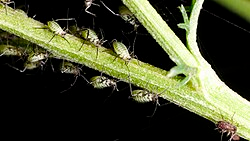
It’s summer and the heat is on! What insect thrives in hot and humid conditions? The aphid of course. This month let’s take a closer look at the aphid.
Aphids are small, sap sucking insects in the insect family known as Aphididea. They are about 1/8 inch long and can be yellow or greenish black in color. Aphids are not harmful to humans but can be very damaging to plants. They can transmit over 150 different plant viruses. These viruses can weaken your plants and may even be deadly to your plants.
Aphids can begin their assault on your plants in the spring and continue to flourish as the temperatures get warmer. Young tender plants are attractive to aphids, as well as plants that are stressed due to lack of, or over fertilization and drought. Stress can make a plant weak and more susceptible to aphid damage. Aphids thrive in hot weather, so be sure to check your plants regularly once the heat arrives in your garden.
Signs of aphid damage can include wrinkled, yellow, or brown leaves, shiny, sticky leaves, stunted plant growth, and less production. If you can control aphid infestations early, your plant will have a better chance of recovering from the damage. When aphid damage first becomes apparent, it may be possible to wash the aphids off the plant with a strong stream of water from a garden hose. Simply point the hose nozzle at the affected plant leaves and turn the water on full blast. Unfortunately, this method will not work well if a plant is heavily infested with aphids.
Small infestations can be treated by using soapy water sprayed directly on the plant. As per the University of Arkansas Ag Center, 1 tablespoon of dishwashing liquid per gallon of water should be sprayed onto the affected plant weekly to target various stages of the aphid life cycle. Weekly spraying should be repeated until signs of aphids are no longer visible. Castille soap can be used instead of dishwashing liquid if preferred. Be sure to spray the underside of the leaves as this is where the aphids lay their eggs.
Lady bugs and lacewings are natural predators of aphids that feed on aphids. You can plant flowers such as dill or clover to attract predators of the aphid. A “trap” crop of sunflowers or nasturtiums can be helpful in deterring aphids from your plants. These flowers are extremely attractive to aphids, and they will choose them instead of other plants. Just be sure to plant them close to the plants you want the aphids to avoid.
Lastly, don’t despair if you find aphids in your garden. They are a warning sign to you that your plant is stressed. Look for the cause of the stress and correct that issue, then follow the steps listed above to get rid of the aphids.
-Gram