
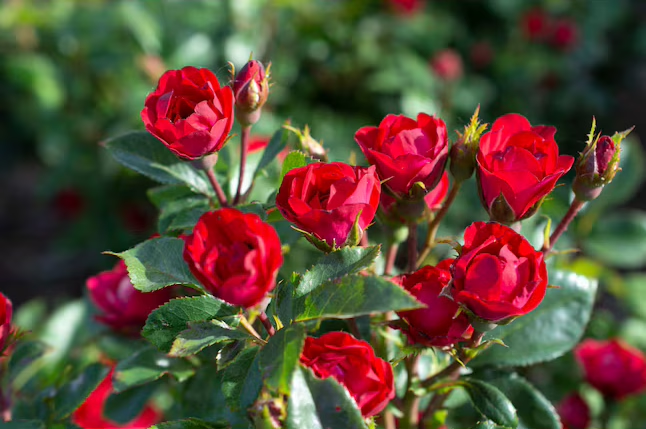
Knock Out roses belong to a specific type of roses known as the modern rose. Modern roses are roses introduced after 1867. Knock Out roses are special hybrid roses that were created by Will Radler in Milwaukee, WI after 30+ years of breeding and crossbreeding roses in his basement. Mr. Radler’s rose, which he named Knock Out because of its extraordinary disease resistance and continuous blooming, “knocked out” all previous standards for rose care and maintenance. They were introduced and made available to the public in 2000.
Knock Out roses are known for their near continuous bloom. These roses are heat tolerant, and perfect for anyone looking for roses that bloom all summer. Knock Out roses thrive in hardiness zones 5 through 10, doing well in both heat and cold, and can tolerate some shade, though full sun is preferred. Knock Out rose bushes can easily grow to 6 feet tall by 6 feet wide or larger. If you do not wish to have a rose bush that is 6 feet x 6 feet large, do not despair. Pruning Knock Out roses is not difficult and, if pruned about twice a year, will help keep them at a manageable size.
When pruning any rose, use sharp hand pruners. This will allow a clean cut and cause less damage to the stems. It is a good idea to wear a heavy pair of gloves and maybe even long sleeves when pruning to protect yourself from the thorns on the rose bush. If you are pruning stems thicker than ½ inch around, you may want to use a lopper. This will make cutting those thicker stems much easier.
The first pruning is done anytime from late January through February. Pruning any later will delay spring and summer flowering. There is no set way to prune a Knock Out rose. It depends entirely on how you want the plant to look in your landscape.
If you want your roses to grow large to form a screen, you would do only light pruning, cutting out any dead wood. Cut the bushes back about 1 foot shorter than the height you want them to be (it is best to never cut them back shorter than 2 feet tall). For the late-winter or early spring pruning, reduce the height of the bushes by about one-half to one-third. This can be done even if you see new growth on the plant. There may even be a few flowers, but you still need to prune. Cutting back Knock Out roses stimulates new growth, clearing the way for more flowers in the next bloom cycle.
The second pruning should happen in late August to early September. This pruning is not as intense as the late-winter pruning. Hard pruning in the heat of summer can stress the plant, especially if it’s already under stress from the summer heat. Knock Out roses can be pruned back by about a third of their height in late summer. Summer pruning should focus on shaping the plant, removing any diseased or damaged branches, and deadheading. Excessive pruning in the summer can delay or reduce fall blooms. Also, the plant needs time to recover from pruning before the onset of colder weather.
Mulch is important for roses. Mulching keeps the rose roots from drying out, which helps the roots establish more quickly. Mulching also helps the soil maintain moisture, resulting in less frequent watering.
Knock Out roses are resistant to many diseases but are susceptible to black spot fungal disease. This disease is caused by moisture on the plant leaves which can happen because of overhead watering, abundance of rain, and even by high humidity for a prolonged time.
To treat black spot on Knock Out roses, remove all infected leaves and debris from the plant and the ground, and prune diseased stems. Always remember to clean your pruning tools with alcohol or boiling water after removing infected parts of the plant to prevent spreading the disease. Rake up and destroy all fallen leaves from around the rose bush to eliminate the fungus spores that have fallen to the ground. Use a fungicide containing sulfur, copper, or neem oil. ALWAYS APPLY FUNGICIDE ACCORDING TO THE PACKAGE DIRECTIONS. I have had good results using a systemic product that includes a fertilizer and insecticide. I use BioAdvanced 12 Month Tree & Shrub Protect and Feed. (see photo) BioAdvance also has a 3 in 1 systemic product specifically for roses. (see photo). Also, water roses at the base to keep foliage dry and apply a layer of mulch to prevent fungal spores from splashing onto the plant when watering. At the end of the growing season, remove all leaves from the ground to prevent the fungus from overwintering.
For a more organic fungicide, try using baking soda to combat fungal diseases like powdery mildew and black spot. For fungal diseases: Mix 1 tablespoon of baking soda with 1 teaspoon of horticultural oil (or insecticidal soap) and 1 gallon of water. Apply this solution directly to the affected areas of the rose plant.
Fertilizing your Knock Out roses doesn’t have to be a mystery. Knock Out roses should be fertilized in the early spring when new growth begins to appear and again in mid-summer if desired for continued blooming.
Look for a fertilizer with an NPK of 10-10-10 or one specifically designed for roses. I use Miracle Grow Water Soluble Rose Plant Food. (see picture) There are also organic options to consider. Compost, manure, and fish emulsion are good organic choices that improve soil health and provide nutrients. Just be sure to follow the manufacturer’s directions for all fertilizers.
It is best not to fertilize with the same fertilizer late in the summer (after mid-August) as this is when roses begin to get ready for winter dormancy. What you can do in late summer to early fall (mid Aug – late Sept), is apply a slow-release fertilizer with low nitrogen content such as bone meal to promote root growth. Be sure to follow the package label with all fertilizers.
Many gardeners believe that banana skins can be beneficial for roses. Bananas are a good source of potassium, calcium, and magnesium, all essential nutrients for healthy rose growth. I have not personally tried this with roses, but I did make banana tea and used it as fertilizer on other plants. The banana tea was less effective on my plants than most other fertilizers, but did no harm to the plant. If you would like to try using banana as fertilizer, I would suggest doing a test on only one plant first to see if there are any adverse reactions. To create banana peel tea simply soak the banana peel in water for 2-3 days, Remove the peels from the water and dilute the banana tea with plain water, at about 1 part banana tea to 4 parts water. Then water your plants at the base of the plant with the banana water.
I hope you have found this information helpful and will try growing Knock Out Roses. They are a lovely addition to any garden. Remember happiness grows in the garden!
-Gram