
Have you noticed less bees buzzing in your garden? Are butterflies not fluttering around like they have in years past? Well, there may be a reason for the lack of pollinators you have been seeing around your garden. Pollinator decline is real and has been attributed to many things such as habitat loss, pesticide use, climate change and disease. But…as home gardeners, we can help our native pollinators by planting and maintaining a pollinator garden. In this blog, I will share ideas on how to start a pollinator garden of your own and become a friend to our bees, butterflies and hummingbirds.
First, what is a pollinator garden? A pollinator garden is a garden planted with flowering plants that provide nectar or pollen for insects such as bees, butterflies, hummingbirds and wasps. Pollinator gardens are needed now more than ever due to the decline of pollinators in many areas of the world in recent years. A pollinator garden will attract pollinators that can transfer pollen from one plant to another, which will lead to fertilization of the plant, successful seed development and fruit production.
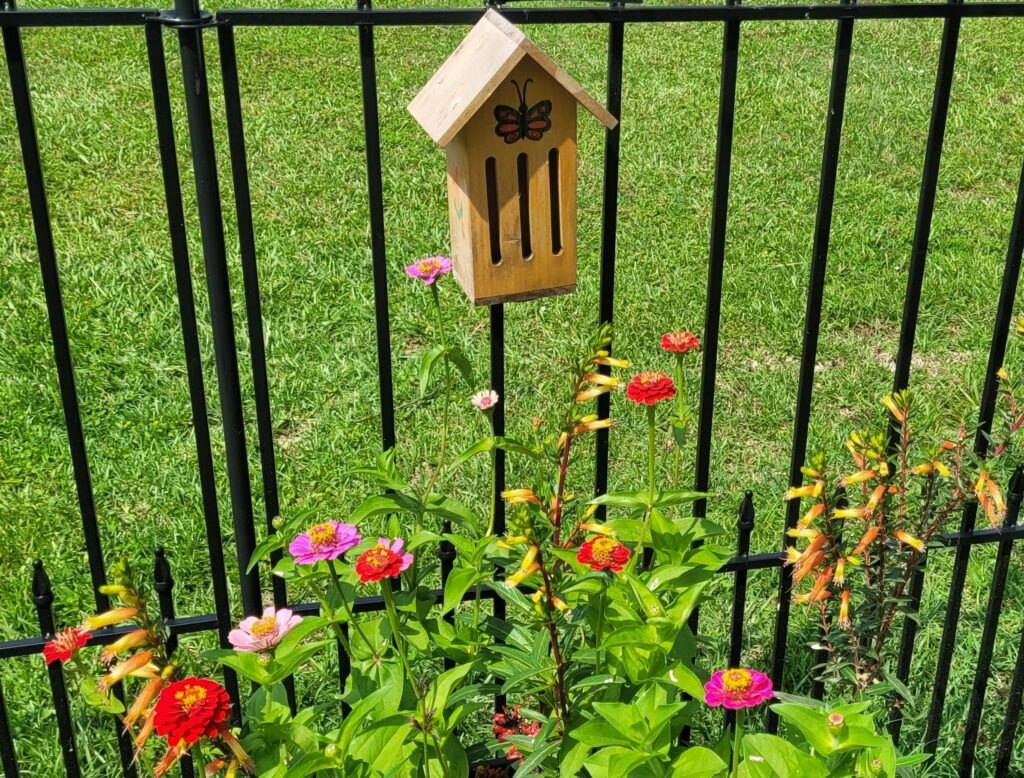
Where should you locate your pollinator garden? A pollinator garden will do best in a sunny location with some protection from the wind. Try for a location that gets about 6 hours of direct sunlight. That is sunlight directly hitting the plant with no obstructions like a building or shade from a tree. You may want to start small until you know which plants are preferred by your local pollinators. I planted a container of zinnias, firecracker plants, and candy corn plants. This was a very pretty combination of flowers, and I learned that each of these plants tend to grow quite tall. I also learned that these plants seem to be favorites of butterflies and hummingbirds in my yard.
It is also a good idea to provide some sort of shelter from the wind in your garden for our pollinator friends. This can be done by using shrubs or a small fence. Get creative! What can you think of that would provide a bit of a break from the wind?
Now we are ready to prepare the soil for our in-ground pollinator garden. (If you are using a container, this step will probably not be necessary.) The best way to begin preparing your in-ground soil is to remove all plants, grasses, and weeds from your chosen location. You can do this by pulling and digging all unwanted vegetation, or you can use a mechanical garden tiller which will dig into the soil and turn it over, burying the vegetation. If you are like me and do not own a tiller, you can rent one from places like Home Depot, or most rental stores. If you feel a tiller is not for you and pulling and digging weeds does not sound like fun, you can simply mow and use a weed whacker to get the vegetation as low to the ground as possible. Next, cover the area chosen for your garden with cardboard or black plastic. Secure this to the ground so that it will not be blown away by the wind. In about 6-8 weeks pull up the cardboard or plastic. Be sure to be careful when getting rid of cardboard or plastic as there could possibly be mold growth on these from lying on the ground for so long. By now, the lack of sunlight caused by the cardboard laying on the ground should have killed any unwanted vegetation. Some may recommend herbicides as a quick method to rid your soil of unwanted growth. I do not do this because we are trying to grow plants in this space, and I prefer not to deal with residue herbicides in the soil of my garden.
It is now time to choose your plants. Choosing plants that are native to your area will be most helpful for local pollinators. If you are not sure which pollinator friendly plants are native to your area, do some research online or at your library. Or contact your local Ag agent, the local Wild Ones group (www.wildones.org) or your local Native Plant Society and ask for their recommendations of local plants for a home pollinator garden. Be sure to remember, densely planted gardens will be able to serve many pollinators at the same time, but a few areas of bare soil will allow nesting sites for bees that are ground nesters.
For suggested plants, I would say that in my experience, bees prefer plants such as bee balm, lavender, coneflower, zinnias, sunflowers and the basil plant flower.
Butterflies are attracted to plants such as sunflowers, milkweed, salvia, Joe Pye Weed, coreopsis, purple coneflower, and asters.
Hummingbirds are migratory birds, so you may not see them at certain times of the year depending on how far north or south you live. The best planting for hummingbirds will include nectar rich plants that bloom when hummingbirds are in your area. A few examples that have worked well for me are salvia, honey suckle, firecracker plants and zinnias.
Hummingbird feeders can be helpful as a supplemental food source when natural food sources are scarce. Hummingbird feeders should be maintained properly and cleaned frequently to avoid diseases. The National Audubon Society’s recommendation for hummingbird feeder food is as follows: 1 to 4 solution of refined white sugar to tap water. That’s ¼ cup of sugar in 1 cup of water. Bring the solution to a boil, then let it cool before filling the feeder.
Just like people, pollinators need to stay hydrated. You should consider water sources such as a bird bath, a small fountain, or as simple as a shallow dish filled with water and a few small rocks or marbles which will give the pollinator a place to land while getting a drink of water. Even mud puddles could be a source of water for pollinators.
Consider providing nesting sites for your pollinators. Nesting sites can include natural items such as dead trees, tree limbs, compost, or shredded leaves. Bee or insect hotels and butterfly houses can be a charming and useful addition to your garden and provide shelter to pollinators. There are many versions of bee and insect hotels and butterfly houses available commercially as well as instructions on how to build one. Just do an internet search to find patterns for pollinator houses. This could be a fun project to get children
excited about the garden while learning about the good things pollinators do for us.
There are possible harmful things to pollinators you should be aware of in your garden. Pesticide use can harm and even kill pollinators. Even drifting of herbicides used in nearby areas or from bug spray you may use on yourself while you are in your garden can be harmful to pollinators.
Improper watering may cause your plants to struggle and could delay or disable their ability to make flowers. Try to set up a watering schedule and be aware of extremes in the weather to keep your plants healthy and happy.
Invasive non-native plants can be a problem as well. These plants as usually fast growing and will compete with the native plants for soil nutrients, water, and sunlight. Be careful when choosing your plants and be sure not to include non-native invasive plants.
Once you have your decided on which plants are the best ones for your garden, plant them, fertilize them, establish a watering schedule, and weed the area when needed. Be patient as some plants take longer than others to bloom. Before long, your pollinator garden will bloom and be all the buzz amongst your local pollinators!
Be sure to go out into your garden as often as you can to see how the pollinators are responding to your hard work. Which pollinators do you see? Is there a plant or flower they all seem to like? Remember, gardening is a learning process. Take note of what worked and what didn’t work and make changes for the next year.
Always remember to enjoy the gifts that nature shares with you through your garden and pollinators are a wonderful gift of nature. Happiness grows in the garden!
-Gram